Climbing out of the cold
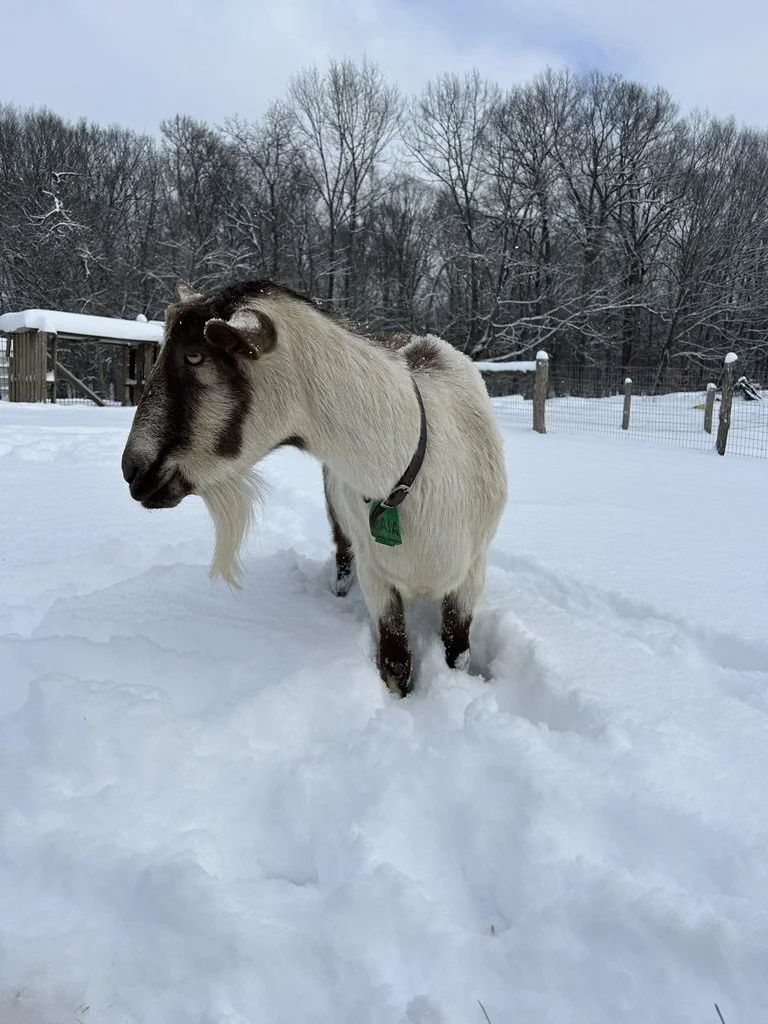
One of our herd matriarchs, Maia, wading through the snow for some scratches
We are truly experiencing a real Michigan winter here on the farm the past few weeks. I believe this has been our longest stretch of single digit and sub zero nights (about 2+ weeks) since moving to the farm in 2016. It’s hard not to fret about the state of the farm and stock when we are hit with these weather extremes. I have had my fair share of nights waking and wondering if everyone is warm enough or if the pipes are freezing in the creamery as I listen to the wind howl or hear the crispness of June and Cash’s barks through the cold winter air.
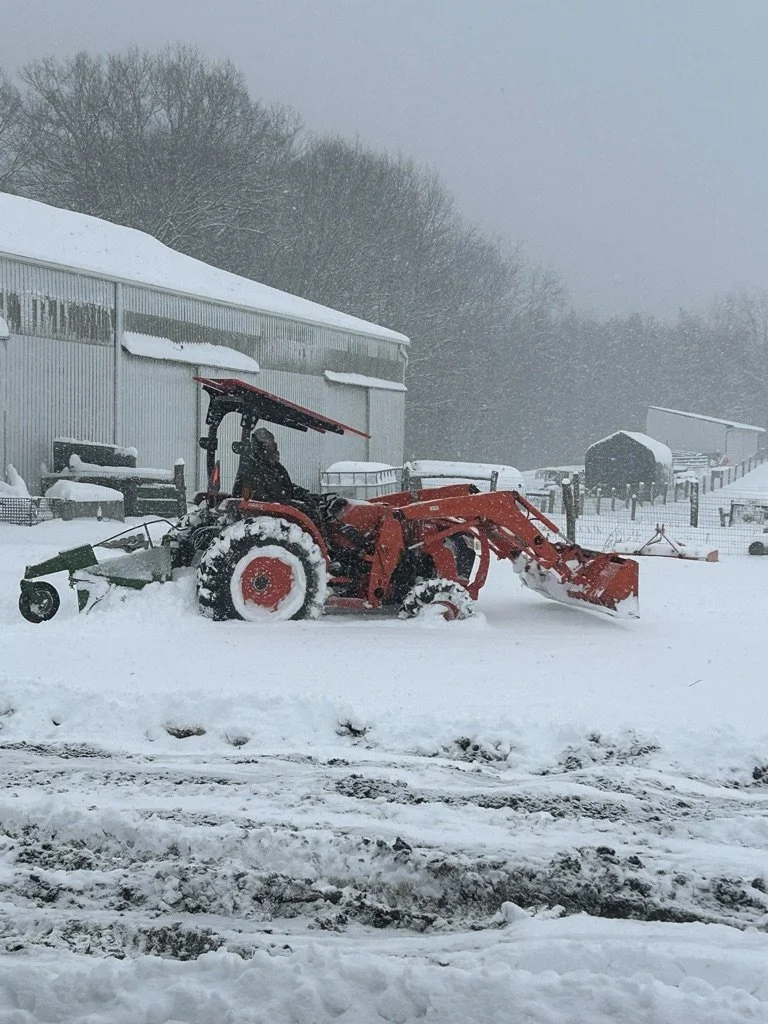
Brett plowing for the gazillionth time this winter
It’s reassuring to know that we have a solid system for these times and our livestock team has put in all the efforts keeping the animals safe and warm, pipes and water flowing, and the roadways plowed. Thank goddess for the electricity in the barns and pastures that keep the water heaters on so that our animals can have round the clock access to unfrozen water. Together with unlimited high quality hay, the water ensures proper digestion which keeps their rumens stoked, almost like an internal furnace.
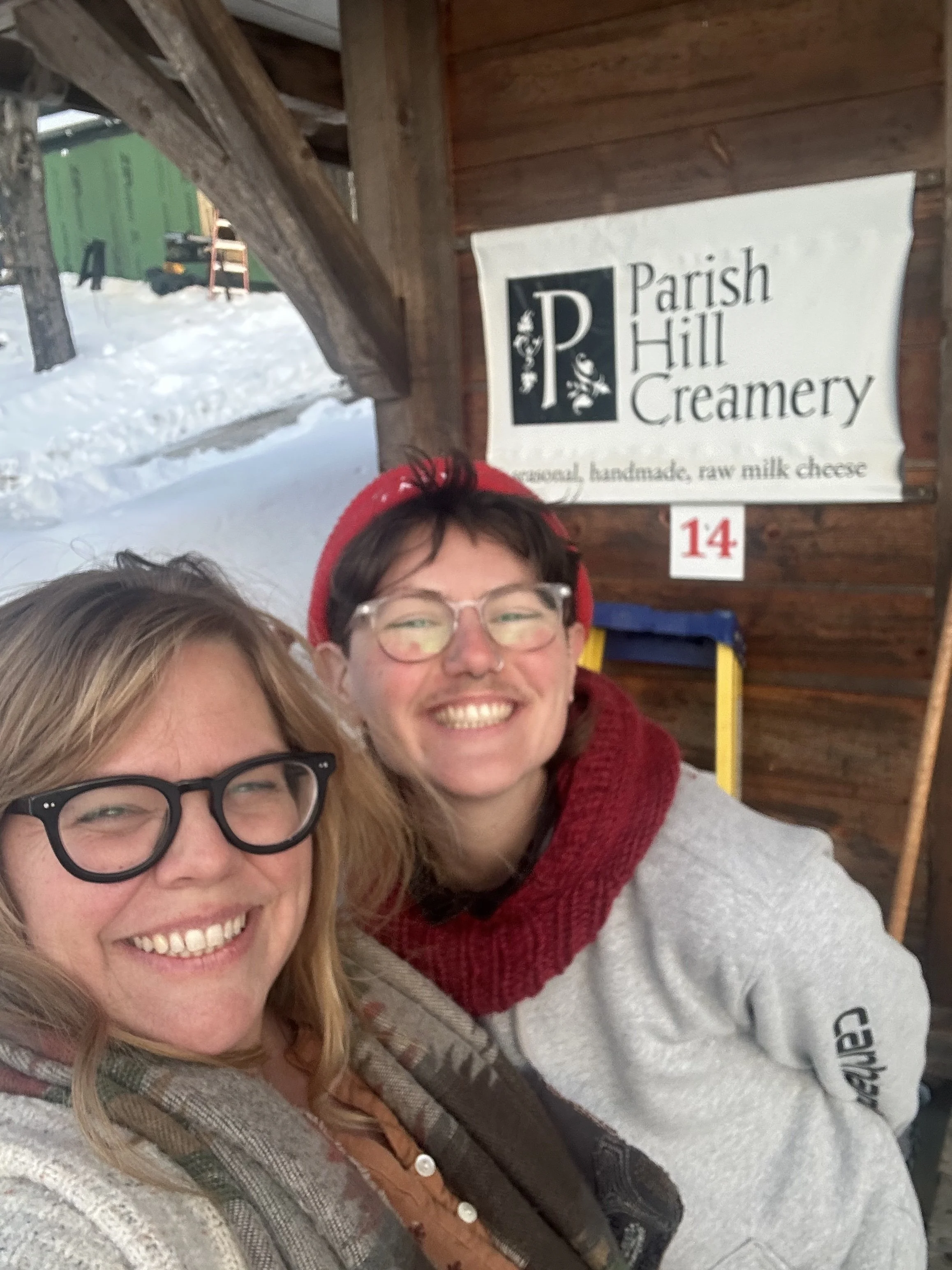
We made it to Parish Hill!
We also make sure everyone has proper access to shelters that keep them out of the snow and wind. Pulling in our beloved “sensies” and giving them their own space and extra attention. These are the most vulnerable of the goats and tend to be the first ones bullied out of the barns or hay feeding areas.
Of course, just like us humans, the livestock can experience their own version of cabin fever and I’d say the hardest part of a long cold spell is the stress the goats endure from not being able to go out and “play” as much as they are used to. The winter hardy sheep love to wander out into the snow and unless it’s blizzard like conditions they are hard pressed to sleep in their shelters even in sub zero temps, but the goats are different. Even though we have selected goat breeds for winter hardiness, they are still high desert animals at heart and typically scoff at the idea of wandering into the snow unless it’s to access their beloved hay.
This makes them all quite restless and it doesn’t take long before they are pushing each other around, action akin to the way my children act after one too many snow days at home. Unfortunately we saw a couple injuries in January (likely tied to this restlessness) that brought extra stress to the team/herd and most likely led to the demise of one of our yearlings after she got her foot stuck in a freak accident and it went necrotic. After all of that, we are happy to be on this side of the cold snap and were even sweating in our coveralls at morning chores in this 25 degree balmy weather.
Apparently it wasn’t cold enough for us here in Michigan, so Tig and I flew the coop to Putney Vermont last weekend for an epic three days of learning at the “The Science and Craft of Raw Milk Cheese Conference”. Although there was some focus on raw milk cheese production, we were truly drawn to the event to learn and connect with other artisan scale cheese makers, especially those that focus on small ruminant farmstead dairy.
It was a truly inspiring weekend filled with so many incredible speakers and lessons learned. Some highlights were the hands on day in the Parish Hill make room (IYKYK) focusing on two curd cheeses with legends Peter Dixon and Brian Civetello, the grass farming for cheese panel, building a sensory program with Josh Windsor of Murray’s, making friends with the Vermont Shepard peeps to talk dairy sheep (!!!), and meeting countless like minded folks who are just as nerdy as us about farmstead cheese, microbes, and grass.
We came home full of ideas for this coming season and beyond that will for sure influence our programming and cheesemaking here at the farm. What a gift it was to be in community with others, putting faith in the future of craft, beauty, and greener pastures in these cold and tumultuous days,
Fresh on the heels of our return we are diving into checking off the last of the items on our winter to-do list, dreaming and planning, seeking out new additions to our team, and trying to retain some of the restful quiet that comes with winter on the farm.
Lab Notes
From the desk of Tig
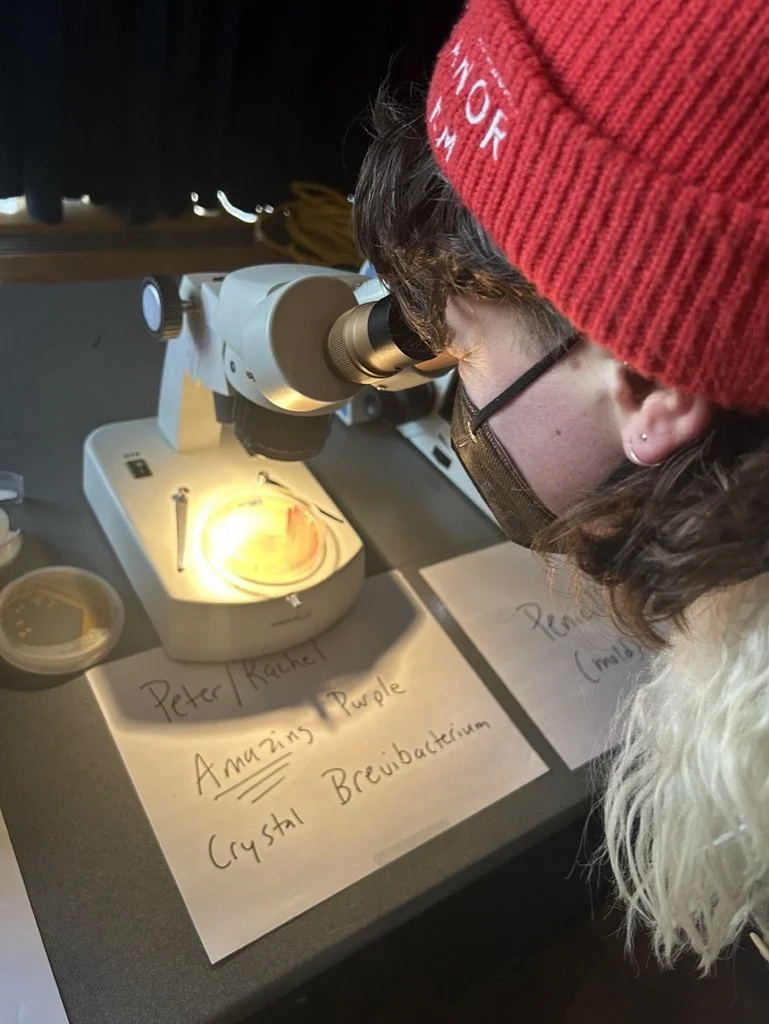
Tig taking a closer look at some bacteria
Our team wears a lot of hats on the farm—from managing livestock health to reading a spring pasture to ladling soft curds into molds. In each of the roles we fill, we choreograph a careful dance between craft and science, listening to the sensory cues we pick up through our hands & ears & eyes and weaving in quantitative learnings from soil tests & aerobic plates & pH meters. One of my favorite things about this dance is that it affirms multiple knowledges—the qualitative and the quantitative, the intuitive and the observable—and in turn, it offers us multiple ways of knowing our animals, our land, our pastures, and our relationships to each other.
With each newsletter, I'll share some of the technical, nitty-gritty tools we use on the farm throughout the season to care well for our flocks and herds, to create delicious cheese, and to be better stewards of the land we tend. And don't worry! There won't be scary equations or obscure jargon or confusing graphs—just a window into the brain of a farmer who moonlights as a data nerd and storyteller, who wants you to love science (almost) as much as they do.